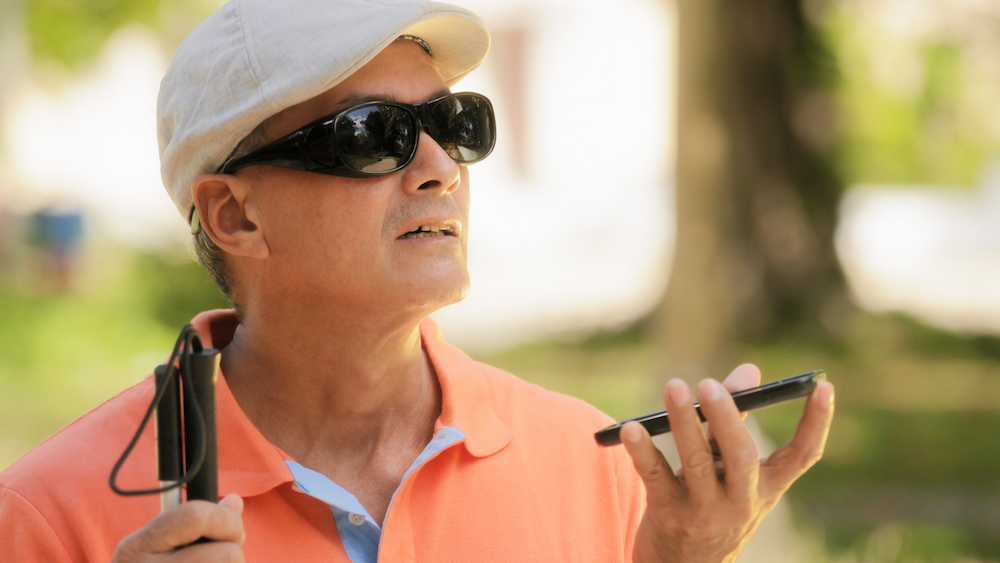
When the first lockdown ended in May 2020, public transport systems introduced new health rules: mandatory masks, social distancing, floor markings, and blocked-off seats. These measures relied largely on visual cues. For visually impaired people, this made certain journeys more complex and required new ways of navigating. This article looks back at these changes, a solution developed by Ezymob, and the lessons this period taught us about transport accessibility.
Health rules based on visual cues
After nearly two months of lockdown, the French were once again free to travel. These journeys came with new health rules that changed the layout of public spaces, particularly public transport in the Île-de-France region:
These measures helped keep everyone safe. However, they relied primarily on visual cues, which raised a question for blind or partially sighted people: how can you spot a floor marking or a blocked-off seat if you cannot see it?
What were the consequences for the independence of visually impaired people?
For many visually impaired people, navigating an environment where contact had to be limited required adopting new habits.
Valérie, for example, had to re-orient herself in her local supermarket after a new one-way system was put in place. Julien explains that the end of lockdown changed the way he did his shopping, as it was no longer possible to touch products. On public transport, he found he needed to ask for help more often to ensure he was maintaining the correct distance.
Testimonials from that period highlight many acts of solidarity. They also mention more difficult situations, such as accessing certain shops, locating queues, or feeling hesitant to ask passersby for help in a context of social distancing.
An app for navigating without sight
To address these new needs, associations carried out awareness campaigns, and technology provided complementary solutions. Thanks to artificial intelligence algorithms integrated into smartphones, it became possible to identify elements of one's environment without touching them.
In this context, Ezymob developed an app in 2020 designed to help visually impaired people maintain social distancing on public transport. It worked as follows:

Designed for use on platforms, as well as on the RER, buses, and the Paris Metro, this app was developed in collaboration with users and transport operators to provide a quick and tailored response to a concrete need. This co-construction approach remains at the heart of Ezymob's solutions.
What are the lessons for transport accessibility today?
Health regulations may no longer be in effect, but that period confirmed an enduring principle: information is more accessible when it can be perceived in multiple ways. Three key lessons emerged from this, which now guide Ezymob’s approach.
These principles also align with the current regulatory framework. Since June 2025, the European Accessibility Act has extended digital accessibility requirements to private transport operators, including their applications.
Conclusion
The post-lockdown period highlighted how much the independence of visually impaired people depends on how information is conveyed. A single instruction can be accessible to everyone if it is designed to be perceived in multiple ways. This is the approach Ezymob has taken since its inception: working with its user community to design solutions that allow everyone to navigate independently, whether in public transport or in public spaces.
Frequently asked questions
Why did health regulations make travel more difficult for visually impaired people?
Floor markings, social distancing stickers, blocked-off seats, and new traffic patterns relied primarily on visual cues. Blind or visually impaired people, who often navigate using touch and sound, had to find new ways to orient themselves.
How can technology help visually impaired people navigate?
Using artificial intelligence integrated into smartphones, an application can identify environmental features and signal them through sound or vibration. In 2020, Ezymob developed an application that informed visually impaired people whether a seat was blocked off on public transport.
How can passenger information be made accessible to visually impaired people?
Information is most effective when transmitted through multiple channels: audio announcements, tactile markers, vibrations, or screen reader compatibility in applications. Designing with the users themselves ensures that the information meets their real-world needs.